Quick answer
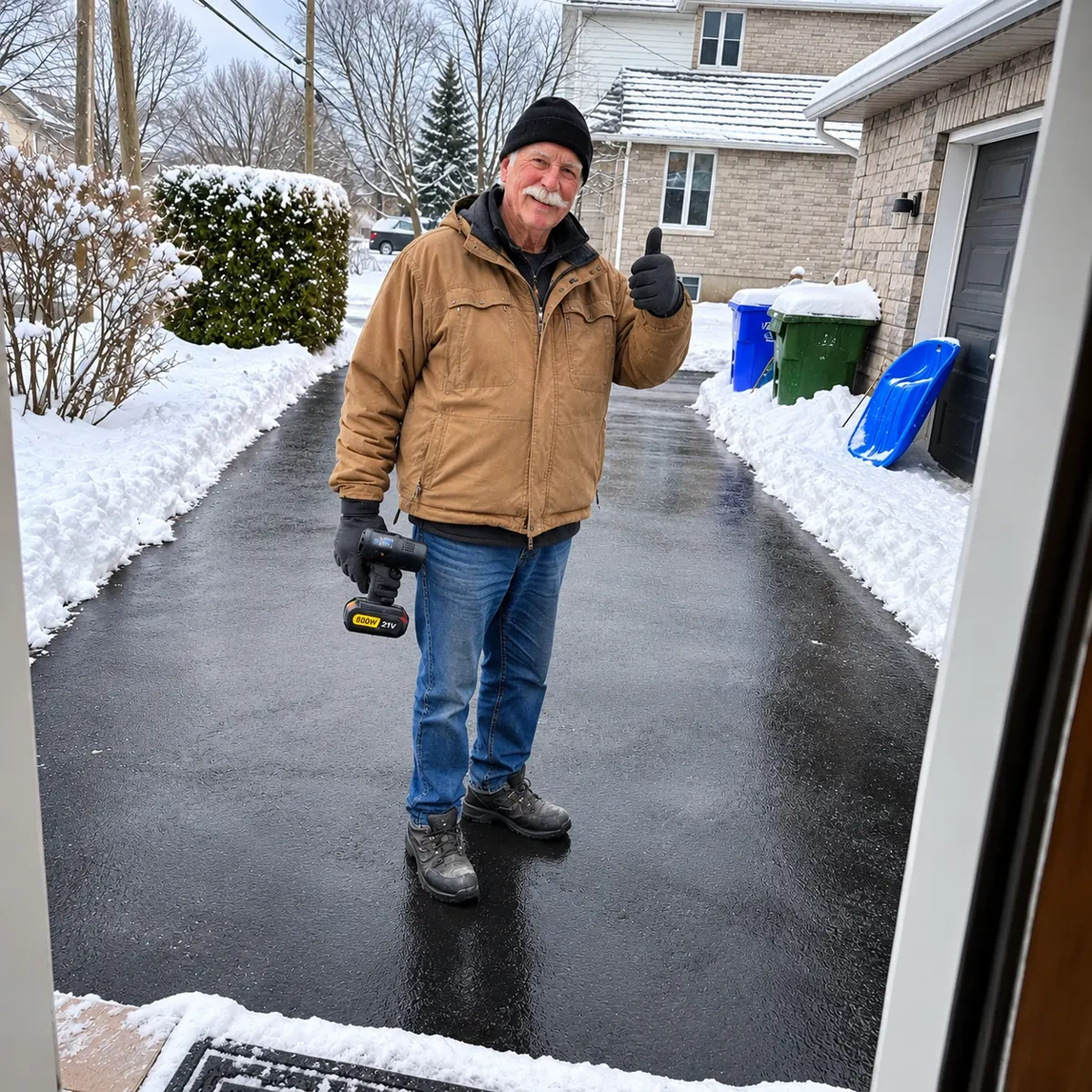
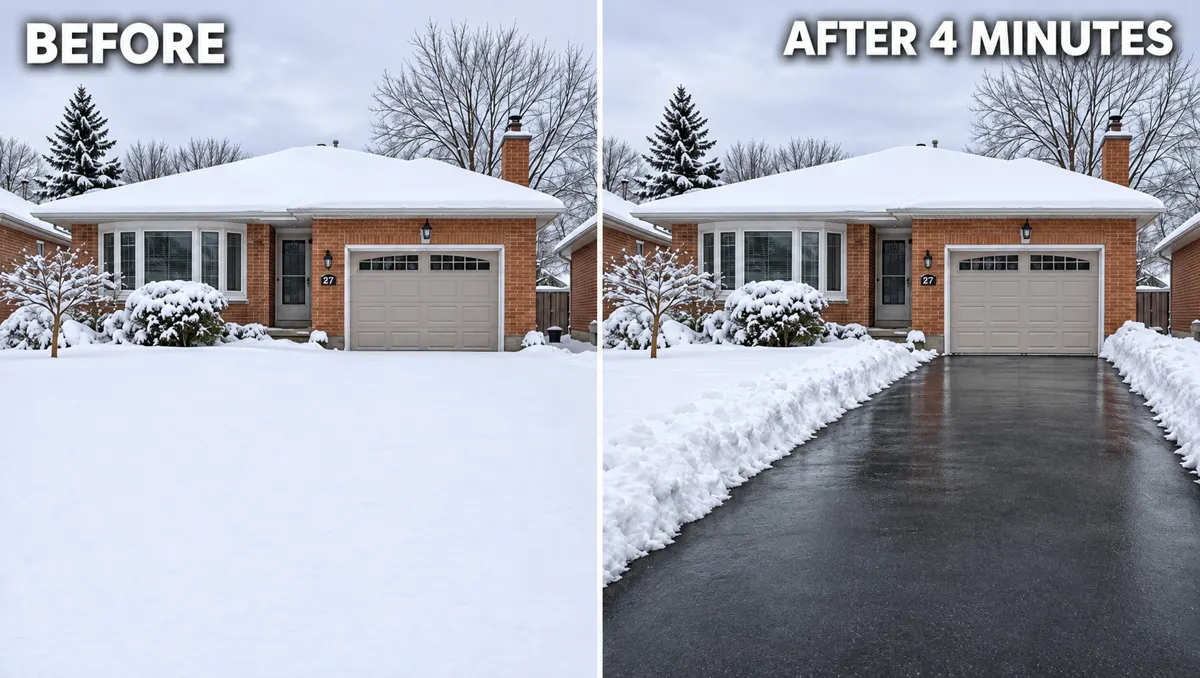
Clear snow early in the day while it's fresh and loose, blow or push it to one side in overlapping strips, clear the car and steps, then spread salt to stop it refreezing. Never use hot water. A cordless blower like SnowBlast makes the job much faster because there's no lifting.
By the SnowBlast UK team · Updated 24 November 2026 · Based on GOV.UK, NHS and Highway Code advice
Time needed
10–30 minutes for most drives
Difficulty
Easy with a blower, hard with a shovel
You'll need
A clearing tool, salt, warm layers
Before you start: what you'll need
- A clearing tool: a cordless snow blower, a snow pusher or a lightweight shovel.
- Rock salt or de-icer: for after you've cleared.
- Warm layers, gloves and boots with good grip.
- A plan for where the snow goes: away from the pavement, drains and your neighbour's drive.
Step-by-step: clearing your driveway
- 1
Check the forecast and start early
GOV.UK advises clearing early in the day because fresh, loose snow is much easier to move. Once it's been walked or driven on, it packs down and can freeze.
- 2
Clear a path to the door first
Start with a safe walkway from the front door to the car and the pavement, so everyone can get in and out.
- 3
Work in overlapping strips
Start next to the house and work away from it. With a blower, keep the nozzle low and angled forward and walk steadily. With a pusher, push in straight lines rather than lifting.
- 4
Move snow to one side only
Pick one edge of the drive, ideally on grass or a flower bed, and send all the snow there. Don't push it into the road or onto the pavement.
- 5
Clear the car
Brush or blow snow off the roof first, then the windows, mirrors, lights and number plates. The Highway Code says you must be able to see and should remove snow that could fall off into other road users' path.
- 6
Finish the steps and edges
Take extra care on steps and slopes. GOV.UK suggests using more salt on steps and steep paths.
- 7
Salt to stop refreezing
Spread a thin, even layer of salt. If you run out, ash or sand gives grip underfoot.
Clear the drive without lifting a thing
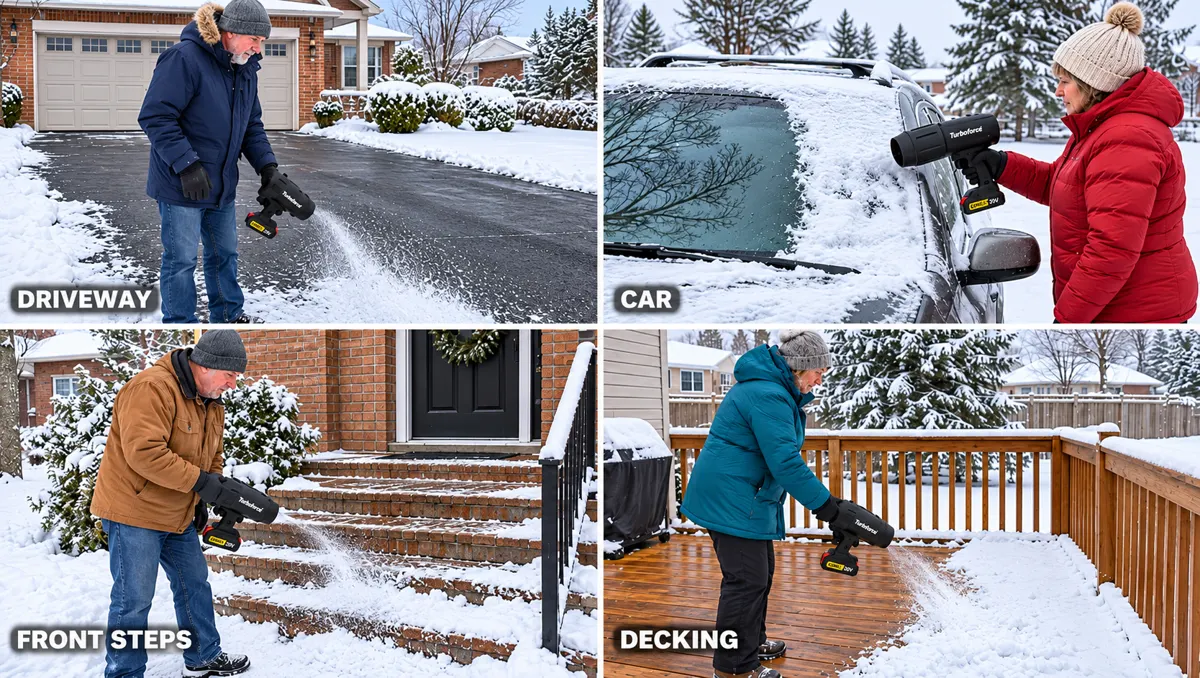
SnowBlast blows fresh snow off driveways, paths, steps and cars. Most homes choose 2: one for the drive, one for the car.
Free tracked UK delivery · 30-day money-back guarantee · Secure checkout
Which tool is best for your driveway?
The right tool depends on how much snow you get and how much lifting you can comfortably do. Here's an honest comparison for a typical UK home.
| Tool | Speed | Effort / back strain | Typical UK price | Best for |
|---|---|---|---|---|
| SnowBlast cordless blower | Fast | Very low, no lifting | £99, or from £66.33 each | Drives, paths, steps and cars in fresh snow |
| Snow pusher | Medium | Medium, pushing only | £20–£40 | Flat, smooth tarmac |
| Snow shovel | Slow | High, lifting and twisting | £15–£30 | Small patches, if you're fit |
| Petrol snow blower | Fast | Low, but heavy to move | £500–£2,000+ | Long lanes and deep snow every winter |
For most UK driveways a light cordless blower is the sweet spot: our snow rarely gets deep enough to justify a petrol machine, but it's heavy enough that shovelling hurts. Compare in detail: SnowBlast vs a snow shovel and SnowBlast vs a petrol snow blower.
If you must shovel
Push snow rather than lifting it, bend your knees, keep loads small and never twist while throwing. Read our snow shovel alternatives to avoid it altogether.
How long does it take to clear a driveway?
Rough times for a few centimetres of fresh, loose snow. Packed or wet snow takes longer with any tool.
| Driveway | With a shovel | With a cordless blower |
|---|---|---|
| Single drive + path | 20–40 min | 10–15 min |
| Double drive + path | 40–60 min | 15–25 min |
| Long or sloping drive | 1 hour+ | 25–40 min |
These are general estimates, not tested timings, and will vary with snow depth, your pace and the size of your drive.
How to clear ice from a driveway (and how much salt to use)
Snow and ice need different treatment. Snow can be moved; ice that has frozen onto the ground has to be melted or broken up first.
- Prevent first: salt straight after clearing, or the evening before a frost, so ice can't bond to the surface.
- Use a little: about a tablespoon of rock salt per square metre is usually enough. More on steps and slopes.
- Give it time: salt needs 15–30 minutes to start working. Then push away the slush so it can't refreeze.
- Run out? GOV.UK suggests ash or sand for grip. Never use hot water, which can refreeze as black ice.
- Block paving and new concrete: use a de-icer labelled safe for these surfaces.
Slopes, gravel, block paving and shared drives
- Tarmac and concrete: any tool works. Salt afterwards.
- Block paving: avoid metal-edged shovels catching on the blocks. A blower moves snow with air, so nothing scrapes.
- Gravel: hold a blower a little higher and at a shallow angle so you move the snow, not the stones.
- Sloping drives: clear from the top down so you're always walking on cleared ground, and salt generously, especially near the road.
- Shared drives: agree with your neighbour which side the snow goes, so nobody's car gets blocked in.
What about deep or wet snow?
To be honest with you: handheld blowers, SnowBlast included, work best on fresh, light-to-moderate snow, which is what most UK homes get. In deep drifts, clear in layers, taking the top few centimetres at a time, or clear a few times during a long snowfall rather than waiting. Heavy wet snow and snow that has been driven on are harder for any tool; a pusher and salt may be needed for those patches. If you get deep snow every winter, a petrol machine may suit you better.
Protecting your back and heart
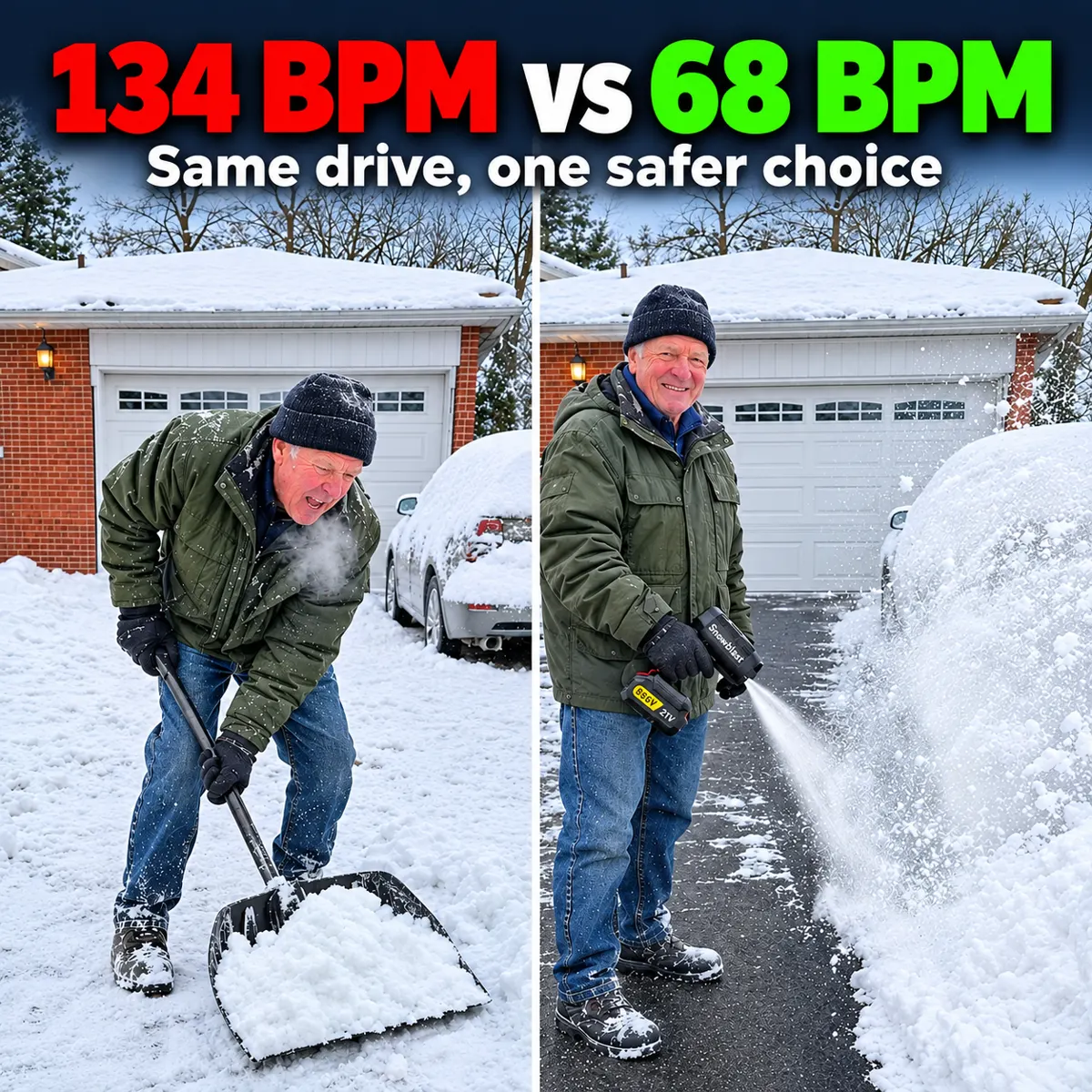
Shovelling heavy snow in the cold is hard physical work. The NHS advises keeping warm and staying active in winter without overdoing it. If you have a heart condition, back problems or haven't exercised in a while, it's sensible to avoid heavy lifting and ask for help or use a tool that does the work for you.
- Warm up indoors for a few minutes first and wear layers you can take off.
- Take a short break every 10–15 minutes and drink something warm.
- Stop straight away if you feel chest pain, dizziness or unusual breathlessness, and call 999 if it doesn't pass.
- Buying for a parent? A light blower lets them clear the drive without lifting. Many families buy a 2-pack: one for them, one for you.
Common mistakes to avoid
- Pouring hot water on the drive. GOV.UK warns it can refreeze as black ice.
- Waiting until the afternoon. Snow that's been walked on packs down and freezes.
- Using council grit-bin salt. It's meant for public roads.
- Overdoing it. Take breaks and stay warm. The NHS cold-weather advice is to keep warm and stay active without overexerting yourself.
- Blocking the pavement. Piling snow on the footpath makes it harder for neighbours to get by.
Should you clear the pavement outside your house?
You can. GOV.UK says it's unlikely you'll be sued or held responsible if someone slips on a path you've cleared carefully. Clearing a strip of pavement is a kind thing to do for older neighbours, postal workers and families on the school run.
A good fit if…
- You have a typical UK driveway and path
- The snow is fresh and loose
- You also need to clear the car and steps
- You want to avoid lifting heavy snow
Not the right tool if…
- The snow has frozen into solid ice (salt it first)
- Snow has been packed down hard by cars for days
Got a car to clear too? See our guide to clearing snow off your car safely.
More guides: cordless snow blowers in the UK, SnowBlast prices and choosing a snow blower.
Frequently asked questions
What is the fastest way to clear snow from a driveway?+
Start early while the snow is fresh and loose, and use a snow blower rather than a shovel. A cordless blower like SnowBlast clears fresh snow in strips without any lifting.
Should I clear snow while it is still snowing?+
If heavy snow is forecast, clearing in two or three lighter sessions is easier than one big one, because thin layers are quicker to move and less likely to compact.
How do I stop my driveway icing over after clearing it?+
Spread a thin layer of salt once the snow is cleared. GOV.UK advises using salt to stop snow and ice refreezing overnight, and ash or sand for grip if you run out. Don't use hot water, as it can refreeze into black ice.
Can I use salt from the council grit bin on my driveway?+
No. GOV.UK says salt from council grit bins is for keeping roads clear. Buy rock salt or de-icer for your own driveway and path.
Will I be sued if someone slips on the pavement I've cleared?+
GOV.UK says it's unlikely you'll be sued or held responsible if someone is injured on a path or pavement you've cleared carefully.
How do I clear snow from block paving without damaging it?+
Avoid metal shovel edges that can catch on blocks. A blower moves snow with air, so nothing scrapes the surface. Use a block-paving-safe de-icer afterwards.
How do I clear snow from a driveway without a shovel?+
Use a cordless snow blower or a wide snow pusher. A blower like SnowBlast moves fresh snow with fast air, so there is no lifting or throwing, which is far easier on your back and heart.
How do I get ice off my driveway?+
Spread rock salt or de-icer and give it time to work, then break up loosened ice with a pusher or the edge of a shovel. No blower lifts ice that has frozen to the ground, which is why clearing snow early matters so much.
How much salt should I put on my driveway?+
A thin, even scattering is enough. As a rough guide, about a tablespoon per square metre for prevention, a bit more on steps and slopes. Too much salt wastes money and can damage plants, concrete and block paving.
Should I clear snow at night or wait until morning?+
If more snow is due overnight, a quick clear in the evening plus salt stops a thick layer building up and freezing. Otherwise clear first thing in the morning while the snow is still loose.
Try SnowBlast on your own driveway for 30 days
If it doesn't make clearing snow easier, send it back for a full refund. Free UK delivery.
Ready for the next snowfall?
Choose your bundle. 2 is our most popular: one for the drive, one for the car or a parent.
Free tracked UK delivery · 30-day money-back guarantee · Secure checkout
What this guide is based on
Written by the SnowBlast UK team using official UK guidance and our own product information. We sell SnowBlast, so we've been clear about where it is and isn't the right tool.